A Rainy Saturday Built Around One Shared Game
Plan a rainy Saturday around one shared game, a comfortable place to play, and open time before and after so the afternoon feels easy rather than scheduled.
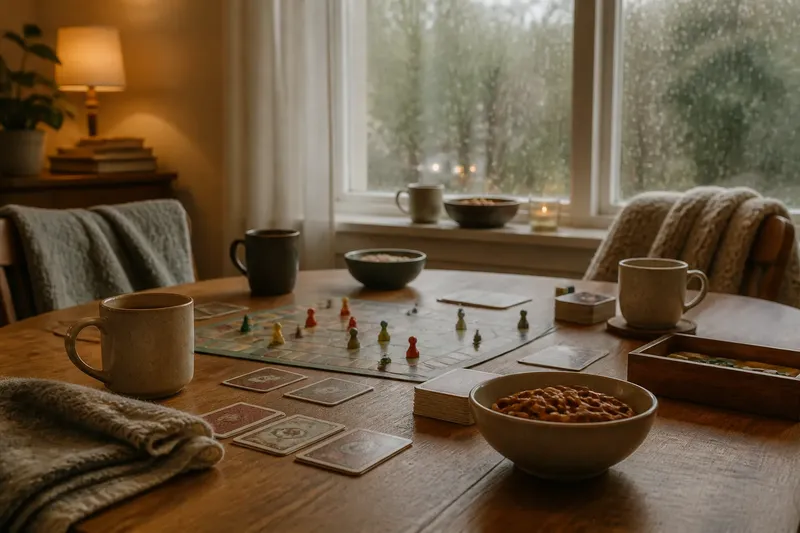
The most common mistake in planning a rainy Saturday is filling every hour with activities. That can turn a cozy afternoon into a timetable to manage, and the game meant to bring everyone together starts to feel like one more appointment. A better plan centers on a single familiar game, with enough breathing room around it for people to arrive, settle in, and decide what comes next.
A rainy Saturday built around one shared game does not need elaborate supplies or a long schedule. The useful work happens beforehand: choose something the group already knows, make a comfortable place to play, and leave the edges of the afternoon open. The game gives the day a focal point without having to carry the whole day.
Let one familiar game anchor the afternoon
“Familiar” does not have to mean everyone knows every rule by heart. It means the game feels inviting rather than like homework. A well-loved board game, a deck of cards, a word game, or a simple cooperative game can work, as long as the people playing can get started without a lengthy explanation.
Consider the group before choosing. A game with a long turn between each player may frustrate a crowd that likes lively conversation. A quiet, reflective game might suit people who would rather sip tea and talk between moves. For a mixed-age group, look for a game where younger players can participate meaningfully and experienced players can enjoy the company instead of concentrating on winning.
Keep the decision small. Offer two or three known options, or let someone name a favorite before the day. Too many choices can consume the easy, unhurried energy you are trying to create. If the group cannot agree, pick the game that is easiest to explain and set up, not the one that promises the most elaborate experience.
Make the space comfortable before people arrive
A table is convenient, but it is not the only workable surface. A cleared coffee table, a sturdy tray on a low table, or a broad dining table can all do the job. The important part is that players can reach the pieces without leaning awkwardly or balancing drinks beside them.
Check the practical details while the room is still quiet. Clear away unrelated mail and objects. Put chairs where people can see one another and the playing area. Set aside a small bowl or box for loose pieces if the game has them. If the room is dim on a rainy afternoon, turn on a lamp before play begins so nobody has to squint at cards or a board.
Comfort also includes the things around the game. Keep water or a simple snack within reach, but not directly beside the pieces. A napkin and a coaster can prevent a small spill from interrupting a turn. If the room tends to feel chilly, offer a blanket or let people choose a seat away from a draft. These touches matter because players can settle in instead of repeatedly getting up to fix the setting.
Make the space flexible rather than precious. People may want to stretch, change seats, or put the game aside for a while. Leave a nearby surface clear enough to hold a cup or a book. There is no need to stage a picture-perfect table; a comfortable room that can adapt is more useful than one that looks carefully arranged but feels fussy.
Keep the schedule loose at both ends
Think of the afternoon as a window, not a sequence of timed blocks. Let people arrive, take off wet coats, make a drink, and chat before anyone asks, “Ready to start?” A few minutes of informal settling can make the game feel shared rather than imposed.
Once the game begins, agree on a natural stopping point. That might be a complete round, the end of a hand, or simply the moment when players have had enough. This small expectation helps avoid the awkward feeling that the group must continue until someone formally calls the afternoon over.
Leave room afterward, too. People may want to talk about a surprising move, replay a funny moment, or help put the pieces away. Someone may drift to the window to watch the rain; someone else may keep chatting at the table. No next activity needs to be ready on cue.
Say you invite two friends for a familiar card game on a wet afternoon. You clear the dining table, place the deck and a bowl of pretzels nearby, and tell them there is no fixed start time. After a few minutes of conversation, someone suggests beginning. When the group finishes a hand and feels ready to stop, the evening can open naturally into more talk or a quiet cup of tea.
Use a small amount of preparation, then stop
Preparation works best when it removes friction without taking over the day. Before guests arrive, check that the game is complete, make sure the rules are available if anyone wants a reminder, and clear the play surface. Then leave the rest alone.
- Choose the game: Pick one the group already enjoys or can learn quickly.
- Check the pieces: Confirm the deck, tokens, cards, or board are together.
- Clear the playing area: Move unrelated items so players have room to reach.
- Set out comfort basics: Add seating, a lamp, water, and a place for cups.
- Keep food separate: Put snacks close enough to reach but away from the pieces.
- Leave the calendar open: Avoid booking another activity immediately before or after.
There is little value in crafting a themed menu, decorating the room, or finding a backup activity for every lull unless the group genuinely enjoys those things. The game and the company are enough. Extra preparation can create more tasks than pleasure, especially when the weather has already offered a good reason to stay in.
What makes a shared game afternoon work?
What if someone does not know the rules?
Give a short explanation and begin with a practice turn if the game allows it. A player can learn by watching, too, so avoid reciting every edge case before anyone has touched a piece.
Should the host choose the game?
The host can narrow the options, but asking the group for a favorite keeps the choice collaborative. If preferences differ, choose the option that feels accessible to the whole table and save the other ideas for another day.
How long should the afternoon last?
Let the people playing decide when they have had enough. A single round may be satisfying, while a relaxed group may want to continue; an open schedule makes either choice feel natural.
What if the game loses its appeal?
Pause without treating the change of mood as a problem. Put the pieces away together, take a break, or let the conversation carry on without replacing the game with another planned activity.
Make room for the parts between turns
A shared game is a useful center for an at-home afternoon because it gives people something to do while leaving space for everything that happens around it. The pauses between turns can hold stories, gentle teasing, or companionable quiet. The game does not have to fill every silence or keep everyone’s attention at every moment.
Pay attention to how the group is responding. If players are leaning in and asking for another round, let the afternoon continue. If attention wanders, take that as a cue to pause rather than a failure of the plan. The point is not to extract a particular amount of play from the day. It is to offer a pleasant shared activity and let the people in the room shape its pace.
For a rainy Saturday built around one shared game, the best final preparation may be leaving the next part undecided. Put the box back on its shelf when the group is done, keep the conversation going if it wants to, and let the rain set the mood without dictating a schedule.