The Quiet Strength of a Paper Fold
The quiet strength of a paper fold comes from its creases and layers. Learn how a small test reveals why paper holds a chosen shape.
The most common mistake with paper that will not hold a shape is adding more material before noticing what one crease can do. A paper fold can stiffen a loose sheet, guide a curve, or help a small form stand, often without glue or extra supplies. The useful change is easy to miss: the sheet has not become a different material, but its shape now resists bending in a different way.
A crease changes how a sheet bends
Hold a sheet of printer paper by one edge, and the unsupported part droops. Fold a narrow strip along its length and hold it again. The fold creates a ridge, and the paper is less willing to bend across that ridge. Its resistance depends on the crease's direction, the paper's grain and thickness, and how the sheet is supported.
A crease is not a new beam glued onto the paper. It is a change in the sheet's geometry. The raised ridge and the surfaces beside it make the paper act differently from a flat plane. The fold can carry the bend along a chosen line, while nearby sections keep their shape. Open the fold, and its memory may remain as a faint track; close it, and the ridge becomes more pronounced.
That distinction matters in small paper projects. A flat piece may sag because it has no form to resist the pull of gravity. A folded edge can give it a direction and a little structure. A shallow channel, a standing tent shape, and a pleated strip all use folds, but they do not behave alike. The number of layers is only part of the story; where the crease runs matters just as much.
One small fold makes the difference visible
Try a modest observation with a scrap of ordinary paper, such as a trimmed piece from a notebook or a sheet of printer paper. Keep one hand ready to support it. Fold a narrow strip along one edge, then compare the folded edge with the neighboring flat portion as you gently lift the sheet. The aim is not to measure strength or make a load-bearing object. It is to notice which part keeps its line and which part bends first.
Now turn the fold so its ridge runs across the direction the paper is sagging. The sheet may respond differently. If you flatten the fold, the ridge loses some of its effect; if you make a second fold parallel to the first, the edge becomes a small channel. These changes let you see that a crease does not simply make paper “stronger” in every direction. It makes bending easier or harder along particular paths.
Press with a fingernail or a bone folder if you have one, but use a light touch. A ruler's smooth edge can help guide a straight crease without cutting the sheet. There is no need to chase a razor-sharp fold: crushing the fibers can weaken the paper, especially if you repeatedly reverse the crease. What is not worth the effort is adding layers just to make a scrap feel substantial before checking whether a better fold would do the job.
Imagine a paper label that will not stand
Imagine that you are making a small place label from a scrap of colored paper for a table at home. The starting point is simple: a flat rectangle keeps tipping when propped against a cup. You want it to stand on its own, but you would rather not tape it to the cup or add cardboard.
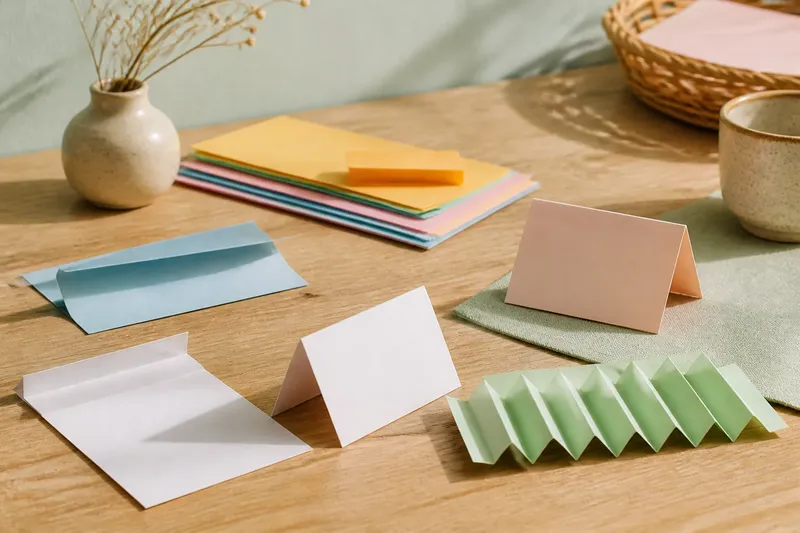
Fold the rectangle in half so the two shorter ends meet, then open it into a tent shape. Set the crease at the top, with the two panels resting on the table. The label now has a broad base made by its own folded panels. If it still slumps, sharpen the central crease gently or adjust how far the panels open. The expected observable result is a label that stays upright more readily because its folded form gives it a base and a ridge, not because the paper has gained material.
Suppose the label still leans. First look at the fold rather than adding another layer. A crease that is off-center can make one panel longer than the other, shifting the balance. A table edge or an uneven surface can also make a sound fold seem ineffective. If the paper is very soft, a narrow folded hem along the bottom edge may help the panels keep their form. Each adjustment addresses a different cause, so change one thing at a time and watch what the label does.
The lesson is not that every object needs a clever fold. The label is light, temporary, and used on a level surface. A paper form meant to carry weight, face moisture, or remain stable in a busy spot calls for a different material choice. For a small decorative piece, though, the fold can be enough, and it keeps the design easy to flatten and store.
Choose folds for the shape you want
Different crease patterns direct paper in different ways. A single ridge gives a sheet a spine. A folded hem makes an edge thicker and less floppy. A V-shaped fold can help a panel stand, while alternating mountain and valley folds create a pleat that opens and closes. These are not interchangeable fixes. Match the crease to the part that needs to hold its line.
- For an edge that curls: Fold a narrow hem toward the back. This gives the edge a return rather than leaving it as a free, flat strip.
- For a panel that needs a spine: Add one long crease in the direction you want it to bend or stand. A ridge works best when it runs through the area that needs support.
- For a small standing form: Use a tent or V fold so the paper's base and panels share the work.
- For an accordion shape: Alternate mountain and valley creases. Keep the spacing fairly even if you want the pleats to open in a regular rhythm.
Paper grain can influence how cleanly a fold forms. Some sheets bend smoothly in one direction and resist a neat crease in another. If a fold looks ragged or springs open, try a different direction on a spare piece rather than forcing the paper. Thin paper can crease readily but may buckle; heavier paper can hold a defined panel but take more pressure to fold. Coated, handmade, or specialty papers vary, so follow the maker's guidance where available.
What should you notice as the fold changes?
Why does a folded strip feel stiffer?
The ridge changes the sheet's shape, so it resists some bends more than a flat sheet does. The direction of the ridge determines which bending motion it discourages.
Does adding more layers always help?
No. Extra layers may make a region thicker, but they can also create a bulky edge or an uneven form. A well-placed crease may solve the problem with less paper.
What if the crease looks messy?
Check whether the paper is being folded against its grain or whether the crease has been pressed too hard. Test a fresh scrap and use a straight edge to guide the fold if a tidy line matters.
Can a fold make paper hold any shape?
No. Folds help paper keep some forms under ordinary, gentle conditions, but they do not turn a sheet into a rigid support. Choose a more suitable material when the object needs to carry weight or withstand rough handling.
Read the paper before adding more
When a folded project disappoints, inspect the paper and the crease together. Is the sheet sagging across the ridge, or is the ridge itself opening? Is one panel longer, or is the base too narrow for the shape? A quick look can point to a more useful adjustment than another layer. Try a different crease direction, widen the base, or start with a paper that suits the intended form.
The quiet strength of a paper fold lies in that small decision about direction. A crease can make a scrap stand, guide a curve, or keep an edge from flopping, while leaving the material light and easy to reuse. With one folded strip and a little attention, you can see how a sheet changes its behavior—and decide whether a fold is enough for the next small paper project.