Jar, Tray or Shallow Box for a Small Collection?
Choose a jar, tray, or shallow box for a small collection by comparing visibility, grouping, and how easily you can rearrange your finds.
The common mistake with a small collection is choosing its container for looks before asking how you want to see the objects. A jar can turn loose finds into a bright jumble; a tray can make a careful group feel scattered. The right display gives each piece a readable place and makes changing your mind easy.
For a modest collection of beach glass, buttons, matchbooks, stones, or small keepsakes, compare three things: how much of each object stays visible, whether pieces can be grouped, and how much effort a new arrangement takes. The container is not just a holder. It quietly decides how the collection behaves.
A jar makes loose pieces feel like one collection
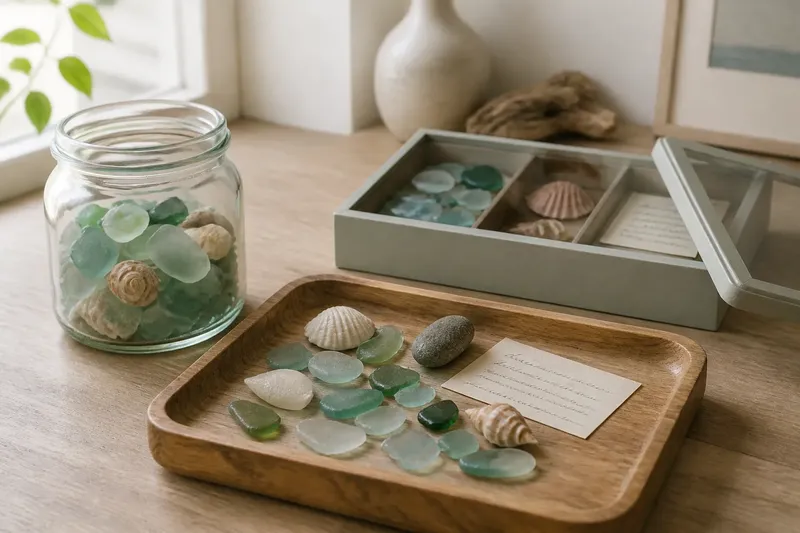
A clear jar gathers objects into a single visual mass. That can be appealing when the pieces share a color, shape, or material. Sea glass in pale green and blue, for instance, reads as a soft color field through glass. A mix of unrelated objects is less cooperative: the pieces near the front hide the ones behind them, and the display can look more like storage than a collection.
Choose a jar when the overall effect matters more than inspecting every item. A wide-mouth jar is easier to fill and rearrange than a narrow-necked one. A clear, straight-sided vessel gives a better view than deeply tinted glass or a curved shape that distorts its contents. Leave enough room to lift pieces out; packing them tightly makes the display harder to change and can scratch delicate surfaces.
Light matters, too. A jar on a bright windowsill can catch the eye, but direct sun may fade paper labels or other sensitive materials. A shelf away from harsh light offers a steadier view. The jar itself can become part of the composition, especially if its lid, rim, or old-fashioned shape suits the objects inside.
For a collection with varied pieces, use the jar as a temporary holding place rather than a final display. It keeps small items together between rearrangements, but it does not provide much control over what viewers notice first. If an individual object has a story or an unusual detail, a jar is likely to bury it.
A tray gives each object room to be noticed
A tray offers the clearest view of individual pieces. Spread objects across a flat surface and you can compare their colors, edges, and differences without lifting anything. A shallow wooden serving tray, a metal tea tray, or a sturdy plate can all work. A raised rim helps keep small objects from wandering, while a flat rimless surface feels more open but offers less containment.
Space is the tray’s strength and its demand. When pieces are placed too far apart, a small group can look accidental. Crowding has the opposite effect: the tray becomes a heap with a border. Aim for a layout that lets each piece be seen while still showing why the objects belong together. A simple line, loose cluster, or color progression can make that relationship legible without adding labels.
Surface color changes the display. Dark stones may disappear on a dark tray, while pale shells can lose their edges against a light one. Try a sheet of plain paper beneath the objects before committing to the tray’s own surface. A scrap of felt or fabric can soften a hard base, but busy patterns compete with small details.
Trays are easy to lift, move, and reset. That makes them useful on a desk or side table, where a collection can be brought closer for a closer look and returned afterward. The trade-off is exposure: dust settles directly on the objects, and a bump can send lightweight pieces sliding. A tray is best where it can sit undisturbed, not where elbows or passing bags regularly sweep across it.
A shallow box adds boundaries without hiding the collection
A shallow box sits between the jar’s containment and the tray’s openness. Its base gives objects a defined area, while its low sides keep them from slipping away. With the lid off, the contents remain visible. A box with a clear lid can protect the group from dust, though reflections may make details harder to see from some angles.
Boxes are especially good at grouping unlike objects. Small paper compartments, folded card dividers, or removable dishes can separate different kinds of pieces while keeping them within one collection. A box can hold a few shells beside a handwritten note, for example, without forcing everything into one visual pile. Keep dividers simple and removable; permanent compartments can become awkward if the collection changes shape.
Depth is the deciding detail. A box that is too deep encourages stacking, which hides the lower pieces much like a jar. A shallow one lets objects lie in a single layer and makes the contents easy to scan. If the lid is hinged, check that it can stay open without looming over the display. A loose lid can be set aside when the box is in use.
The box also gives a collection a natural boundary. That can be helpful if the number of objects keeps growing: when the base is full, you can edit the group instead of letting it spread across a shelf. This is not a rule that every piece must fit forever. It is a gentle prompt to decide which objects best show the collection’s character.
Choose the container by the way you look
Think about the moment you want the display to create. If you enjoy noticing a color or texture from across the room, a jar may make a stronger, simpler shape. If you like picking out one object and turning it in your hand, a tray leaves the most freedom. If you want to compare small groups or include a note, a shallow box gives you useful structure.
Consider how often the arrangement changes. A tray makes frequent edits quick: lift a piece, shift a cluster, and the new layout is visible at once. A box is also adaptable, especially with loose dividers. A narrow jar takes more effort because pieces must be poured or fished out; that can be a nuisance if you like to handle the collection often.
Also consider the objects themselves. Fragile paper, delicate shells, and pieces with protruding edges may be safer lying flat than tumbling together. Smooth, sturdy objects can tolerate a jar better. If the collection includes mixed materials, separate anything that could scratch, stain, or catch on its neighbors. Follow any care guidance that came with a material or object.
Imagine you have a handful of beach glass, two shells, and a folded note from a day at the shore. If you mainly want a wash of sea-glass color, place the glass in a clear wide-mouth jar and keep the shells and note elsewhere. If you want to inspect each piece, arrange them on a tray with the shells at one end. If the note belongs with the objects, use a shallow box and set it beside the glass, with a loose paper divider between the groups. The visible result is different each time because the container gives the same finds a different job.
Small adjustments can make a display easier to read
Before settling on a container, arrange the collection on a clean tabletop. Notice which pieces disappear behind others, whether the group looks connected, and what happens when you move one object. Then try the objects in the jar, tray, or box you already own. A spare saucer, gift box lid, or clear kitchen jar can answer the practical question without turning the choice into a shopping errand.
- Check whether every important piece is visible from the usual viewing angle.
- Look for objects that can scratch, stain, or snag neighboring pieces.
- See whether the container makes the group feel connected or merely contained.
- Try moving one object and notice whether the arrangement is easy to reset.
- Check the display spot for direct sun, dust, bumps, and available space.
- Decide whether a lid, rim, divider, or plain base helps more than it distracts.
Not every collection needs a custom insert, matching labels, or a carefully coordinated backdrop. Those details can consume the pleasant part of the project: looking closely at what you already have. Add a divider only when it solves a real problem, and leave the rest alone.
What should you choose for different kinds of objects?
Is a jar good for a collection of small stones?
A jar works well if the stones are sturdy and the color mix is part of the appeal. Choose a wide opening so you can rearrange them, and avoid filling it so tightly that the lower stones vanish.
Should paper keepsakes go in an open tray?
An open tray makes paper easy to see, but it leaves it exposed to dust, spills, and strong light. A shallow box with a lid offers more shelter; keep paper flat and separate from rough objects that could catch or mark it.
Can one display mix objects with different shapes?
Yes, if the objects have a visible connection, such as a shared place, color, or occasion. A shallow box or tray gives you room to group them; a jar may hide the pieces that need more space around them.
How can you change a display without buying a new container?
Try the collection in a vessel already at home, then use plain paper or a removable card divider to test a different grouping. The main search phrase, jar, tray or shallow box for a small collection, is a useful reminder to choose for visibility and rearrangement, not for novelty.
A good display does not have to settle the collection forever. Start with the container that makes the objects easiest to enjoy now, and keep the next arrangement within reach. A different season, shelf, or newly discovered piece may suggest a better grouping later.